In the world of investing, consistency can often outweigh timing. By committing to regular contributions, investors can navigate market ups and downs with confidence and clarity.
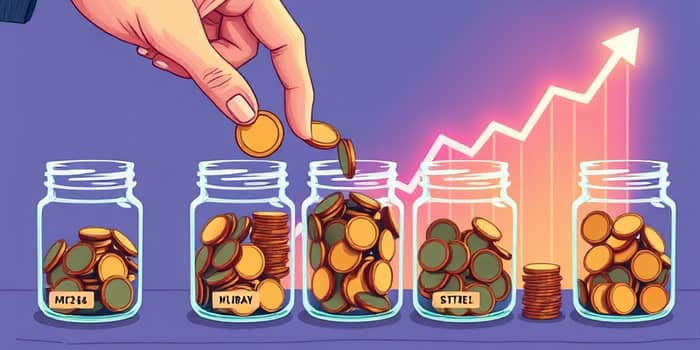
Dollar-cost averaging (DCA) is an investment strategy where you invest a fixed amount at regular intervals, regardless of market fluctuations. Instead of attempting to predict peaks and troughs, this approach spreads out purchases over weeks, months or years.
The process effectively buys more shares when prices are lower and fewer when they rise, which smooths out your average cost per share. Over time, this can reduce the emotional burden of market timing and help build long-term wealth.
Implementing dollar-cost averaging is straightforward. Start by defining a schedule and sticking to it.
By automating and maintaining discipline, you transform investing from a stress-inducing chore into a seamless habit.
To illustrate, consider an investor who allocates $1,000 each month over five months into a chosen fund. Market prices fluctuate, but purchases occur consistently. The table below highlights how share accumulation and average cost evolve:
At the end of five months, the investor has acquired 510.35 shares at an average cost of $9.81 per share, compared to a simple average market price of $10.00. This demonstrates how volatility can work in an investor’s favor under DCA.
While anyone can use this method, certain groups find it especially appealing:
This strategy adapts to diverse goals and comfort levels, from cautious savers to more adventurous growth seekers.
Over decades, disciplined contributions can generate powerful outcomes. Key advantages include:
By focusing on process rather than predictions, you harness the market’s inherent ups and downs to your advantage.
Dollar-cost averaging is not a guaranteed path to outperformance. In rising markets, lump-sum investing often yields higher returns because more capital is exposed sooner. Studies show that lump-sum contributions beat DCA nearly 70% of the time in bull markets.
However, DCA shines during downturns, reducing downside risk and preserving capital. To address the growth gap, consider periodically reviewing your allocations and deploying any excess cash strategically when valuations dip.
Investing emotions—fear and greed—can derail even the best-laid plans. Dollar-cost averaging sidesteps these pitfalls by embedding a mechanical routine. This maintaining discipline during market volatility approach builds confidence and removes the burden of perfect timing.
Over time, it builds long-term wealth through steady contributions while reinforcing habits that outlast emotional impulses.
Seasoned practitioners may refine DCA by temporarily accelerating contributions during market dips. Others park ready capital in short-term money market funds, deploying chunks systematically as opportunities arise.
Align your approach with your risk tolerance. Conservative investors might favor broad index ETFs, while growth seekers could include selective blue-chip or emerging-market equities.
Commitment and automation are the twin pillars of success. Set up automatic transfers, mark periodic portfolio reviews on your calendar, and resist the urge to deviate during turbulent periods.
By treating investments as a non-negotiable part of your budget, you ensure that each contribution moves you one step closer to your financial goals.
Dollar-cost averaging offers more than potential returns—it provides a roadmap to calmer, more predictable investing. By embracing turns uncertainty into opportunity over time and sticking to a plan, you transform market volatility from a source of stress into a tool for growth.
Adopt the disciplined dollar today, and watch steady contributions accumulate into a foundation for lifelong financial well-being.
References