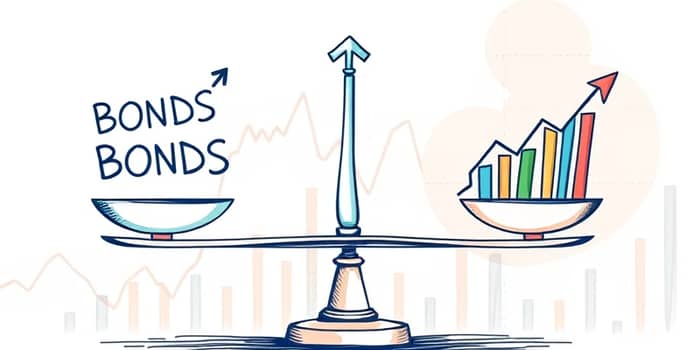
In the dynamic world of investing, maintaining a bond portfolio requires more than just initial setup; it demands ongoing attention through the art of rebalancing to ensure it aligns with your financial goals.
Rebalancing is the disciplined process of adjusting asset allocations back to target levels, preventing drift that can amplify risk unexpectedly.
For bond investors, this practice is especially critical due to unique challenges like transaction costs and market volatility, making it a cornerstone of long-term success.
At its heart, portfolio rebalancing resets your investments to maintain a desired risk level, ensuring no single asset class becomes overly dominant.
Over time, different assets grow at varying rates, causing allocations to shift away from your original strategy.
In a simple example, if equities surge while bonds lag, your portfolio's risk profile can change dramatically, necessitating adjustments.
This drift not only increases exposure to market swings but can also derail your financial plans if left unchecked.
Choosing how often to rebalance is a key decision that impacts performance and costs.
Calendar-based rebalancing involves reviewing portfolios at set intervals, such as annually or quarterly.
Threshold-based rebalancing, or band rebalancing, triggers adjustments only when allocations breach predefined ranges.
Frequent rebalancing, supported by decades of data, can significantly enhance risk-adjusted returns across global markets.
Hybrid approaches combine strategies, like annual reviews with tolerance bands, to balance discipline with flexibility.
Rebalancing bond portfolios involves unique factors that require careful handling.
Transaction costs can be significant, with bid-ask spreads impacting returns, especially in illiquid segments like corporate bonds.
Tax implications add another layer, as shifting bonds may trigger income recognition, so pacing trades is essential.
In volatile markets, tighter bands or more frequent checks might be necessary to contain risk effectively.
Beyond traditional methods, innovative strategies can optimize bond portfolio management.
Accumulation rebalancing involves buying underweight assets with new contributions, avoiding sales that might incur costs.
Strategic rebalancing uses trend-following signals for timing, which research shows can improve drawdowns by 2 to 3 percentage points.
This approach contrasts with static methods, offering a dynamic way to navigate market uncertainties.
Advanced tools like mixed integer programming can handle the complexities of bond portfolios, such as trading lot sizes and constraints.
This allows for more precise rebalancing scenarios, accommodating various portfolio sizes and market conditions.
By leveraging optimization, investors can achieve better risk-adjusted outcomes in their fixed income allocations.
Looking ahead, bond markets present compelling opportunities that align with rebalancing strategies.
High starting yields make fixed income attractive, with historical data indicating strong return potential.
Emerging markets bonds, for instance, offer higher yields and have outperformed developed markets on a volatility-adjusted basis.
Duration strategy favors short to intermediate maturities, while a relative value approach emphasizes capital preservation over momentum.
These insights guide rebalancing decisions, ensuring portfolios are positioned for future gains.
Active ETFs offer flexible solutions for dynamically managing bond positions, combining active management with ETF benefits like liquidity.
Their growth highlights the importance of adaptability in today's evolving rate markets.
A flexible, diversified approach is key for 2026, contrasting with traditional static strategies.
This adaptability helps navigate economic uncertainty, making rebalancing more effective.
Effective rebalancing is integral to managing portfolio risk and ensuring long-term stability.
Diversification across asset classes and international exposure reduces concentration and enhances resilience.
Equities typically show higher volatility than bonds, so rebalancing prevents overexposure during market shifts.
By maintaining a balanced mix, investors can mitigate the impact of market fluctuations and stay aligned with their goals.
In conclusion, mastering the art of rebalancing transforms bond portfolio management from a passive task into an active, strategic endeavor.
By embracing disciplined frequency, considering bond-specific factors, and leveraging modern approaches, you can optimize performance and secure your financial future.
Start today by reviewing your allocations and implementing a rebalancing plan that fits your unique needs and market outlook.
References