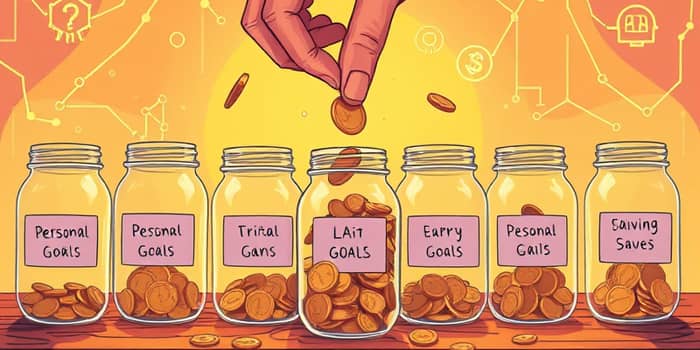
Imagine turning mere cents into a growing nest egg—automatically. That’s the transformative power of micro-savings. By channeling small, consistent contributions into purpose-driven accounts, you build resilience, reach long-term goals, and cultivate lasting financial confidence with minimal effort.
Micro-savings refers to the practice of depositing tiny, often automated amounts—sometimes mere coins—to accumulate meaningful financial cushions. Rooted in behavioral finance, this approach leverages psychological insights like loss aversion and reward loops to nudge consistent saving habits.
Modern technology, including AI-driven analytics, personalizes these savings journeys. For example, an AI tool might suggest saving €5 each time you dine out, or allocate your next tax refund toward an emergency fund. Over time, these increments compound into substantial balances.
Embracing micro-savings starts with selecting the right platform or method. Many apps automatically round up each transaction and transfer the spare change into a separate account. Others allow you to set conditional rules, such as depositing $1 for every coffee purchase.
Real-world results showcase the transformative potential of micro-savings. Financial institutions and microfinance organizations alike report substantial gains in engagement, retention, and client well-being.
Behind every statistic lies a human story of empowerment. Consider Sarojini Devi in India, who used a $135 microloan to launch a beauty salon. With modern financial empowerment, she trained staff, employed two assistants, and now supports her extended family.
In Bangladesh, Mohammed Yunus’s model enabled a post-cyclone fisherman to secure a $240 microloan, expand into tailoring, and employ four locals. His home was rebuilt stronger, and his business thrives with dignity and stability.
Across Nigeria, the LAPO “My Pikin & I” initiative launched over 125,000 child savings accounts paired with maternal insurance. Although insurance uptake remains low, families delight in watching savings grow and children plan for school.
While micro-savings excels in habit formation and inclusion, challenges persist. Low interest rates or fee structures can dampen enthusiasm over time. Insurance adoption often lags behind savings growth, signaling a gap in integrated product design.
Insights from human-centered design reveal the importance of empathy and iteration. Programs that embed user feedback, simplify interfaces, and offer conditional match incentives—such as bonuses for educational or health spending—achieve higher engagement. Empathetic, user-centered design remains a cornerstone of success.
As AI and financial technology evolve, micro-savings will become ever more intelligent and adaptive. Imagine algorithms that adjust saving targets in real time based on income fluctuations, or community platforms where peers encourage one another with shared milestones.
Whether you’re a novice saver or a fintech innovator, here are practical steps to harness the power of micro-savings:
Your financial future thrives on consistency. By embracing automated round-up mechanisms and diverse, resilient savings portfolios, you create a foundation that withstands market swings and life’s uncertainties. Small habits truly yield big outcomes.
Mastering micro-savings isn’t just about money; it’s about cultivating confidence, dignity, and opportunity—one cent at a time.
References