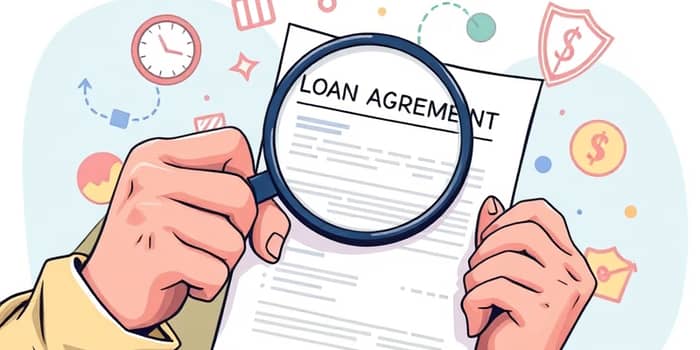
Signing a loan agreement is a pivotal moment in anyone's financial journey, yet many do so without fully grasping the terms that bind them.
This can lead to unexpected burdens and stressful consequences down the line, turning what should be a helpful tool into a source of anxiety.
By learning to decode these documents, you take control of your financial health and pave the way for smarter, safer borrowing.
This guide will walk you through every critical aspect, offering practical insights to transform confusion into confidence.
Whether you're securing a personal loan, funding a business, or managing debt, this knowledge is your first line of defense.
It empowers you to ask the right questions and spot red flags before they become costly mistakes.
Every loan agreement begins with identifying the key players and foundational terms that set the stage for the entire contract.
The identity of parties must be clearly stated, including full names and addresses of both lender and borrower, to avoid any ambiguity.
This section also includes the date of agreement, which is crucial for tracking timelines and legal enforceability.
Other basic elements form the backbone of the document, ensuring it is comprehensive and legally sound.
These components prevent misunderstandings and provide a clear framework for both sides.
Neglecting them can leave you vulnerable to disputes or unenforceable terms.
Financial terms are the heart of any loan agreement, directly impacting your payments and overall cost.
The interest rate is expressed as an annual percentage rate (APR), which includes all fees and must comply with usury laws to avoid being unenforceable.
A significant gap between APR and the base rate often signals high hidden fees, so scrutinize this closely.
Not charging interest or setting rates too low can trigger tax issues, making it essential to strike a balance.
Repayment terms dictate how you'll pay back the loan, with several common options available.
Watch for balloon payments or prepayment penalties, as these can be predatory signs that increase your financial burden.
Fees, like origination costs, are influenced by your credit score and loan purpose, and they can inflate the APR significantly.
Understanding these elements helps you budget effectively and avoid surprises.
Protective clauses safeguard both parties by outlining obligations and limitations before and during the loan term.
Conditions precedent are requirements that must be met before funds are released, ensuring all groundwork is solid.
A definitions section is critical for terms like EBITDA or material adverse change, preventing disputes by clarifying language.
Representations and warranties are promises made by the borrower, such as legal authority and accurate financial statements.
Affirmative covenants require the borrower to maintain certain actions, like providing regular financial updates.
Negative covenants restrict the borrower from specific activities, such as taking on additional debt or altering the business without consent.
Security or guarantee clauses detail collateral or third-party guarantees, offering lenders recourse in case of default.
These protections create a balanced agreement that minimizes risk for all involved.
Default clauses outline what happens if terms are breached, making it vital to comprehend the triggers and remedies.
Events of default can vary, but common ones include missed payments or breaches of covenants.
Remedies for default can be severe, including acceleration of the loan, foreclosure, or collateral seizure.
Other risks, like mandatory arbitration clauses, waive your right to court proceedings and class actions, limiting legal recourse.
Awareness of these risks allows you to negotiate better terms or seek alternatives.
Empower yourself with best practices to review and manage loan agreements effectively, turning complexity into opportunity.
Start by confirming that payment schedules are equal and predictable, avoiding hidden costs.
Analyze the impact of all fees on the total loan cost, and question any unclear sections until they are explained in plain language.
Remember, a loan agreement is more than a formality; it's a tool for achieving your goals responsibly.
By mastering its components, you not only protect yourself but also build a foundation for financial resilience and growth.
This knowledge transforms fear into foresight, enabling you to borrow with confidence and clarity.
Take the time to decode every detail, and you'll navigate the financial landscape with empowered ease.
References