In the world of borrowing, the Annual Percentage Rate (APR) is frequently touted as the ultimate measure of loan affordability.
It promises a standardized view by combining interest with certain upfront fees, allowing for apples-to-apples comparisons across lenders.
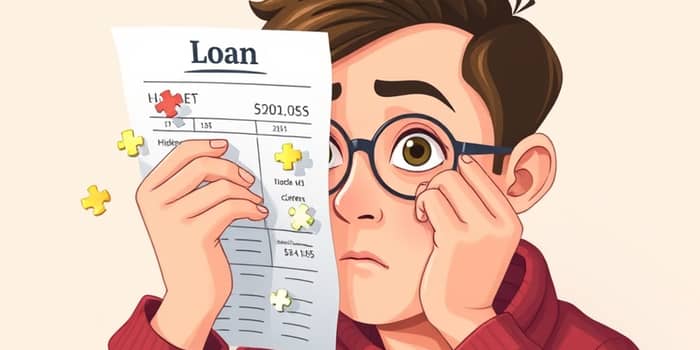
Yet, beneath this surface, a host of hidden costs can lurk, turning what seems like a good deal into a financial trap.
This article delves into the fees that APR overlooks and provides you with the tools to protect your finances.
Understanding these hidden expenses is essential to avoid unexpected financial burdens and make informed decisions.
APR is designed to include the interest rate and unavoidable fees like origination charges, spread over the loan term.
For example, a $18,000 loan at 14% interest with a 6% origination fee yields an APR of approximately 16% over four years.
However, it excludes optional or conditional fees, which can add 10-20% or more to your effective costs.
Key limitations of APR include:
To get a full picture, you must look beyond APR and calculate the total dollar cost of the loan.
Each loan category comes with its own set of potential hidden expenses.
Understanding these can help you anticipate and negotiate better terms.
Common hidden fees in personal loans include:
Always read the fine print to avoid unnecessary costs.
Mortgages are notorious for accumulating fees during closing, which can total 2-6% of the loan amount.
Hidden costs here might include:
Shopping with reputable lenders can help minimize these markups.
For business loans, shorter terms often have higher APRs but lower total costs due to less interest accrual.
Merchant cash advances, for instance, can have an effective APR of 160% but lower short-term expenses.
It's vital to compare the total payments minus principal to assess true affordability.
Contrary to myths, hard money loans from reputable lenders are transparent with fees like underwriting and appraisal costs.
Shady operators might hide fees, so always request itemized statements to ensure full disclosure.
In the high-rate environment of auto financing, watch for add-ons like extended warranties or gap insurance not included in APR.
These can silently inflate your overall borrowing expense.
To see how hidden fees play out, consider this comparison of a $30,000 loan across different types.
The table below highlights how APR can be misleading.
This table shows that a lower APR doesn't always mean lower total cost.
For instance, a 40% APR loan over three months might cost only $1,013.58 in total, while a 6% APR over seven years costs $6,813.47.
Always calculate the cost per dollar borrowed to make informed decisions.
To avoid hidden fees, use these strategies:
These methods empower you to navigate borrowing with confidence.
Protect yourself by following these actionable steps.
By being proactive, you can navigate the borrowing landscape with assurance.
Hidden fees often disproportionately affect low-income and minority borrowers, exacerbating financial disparities.
Regulations standardize APR but leave optional fees largely unregulated, making personal vigilance essential.
Whether for a home, car, or business, understanding hidden costs transforms you from a passive borrower to an informed consumer.
Arm yourself with knowledge, ask the right questions, and always look beyond the APR to secure a loan that truly fits your needs.
Remember, a transparent loan process builds trust and ensures that you achieve your financial goals without unwelcome surprises.
Take control of your borrowing journey today.
References